The Anyplace Ecosystem
One system. Five applications. Same parts, different geometry.
The Anyplace Ecosystem is the practical answer to the question Y Design asks: why should housing, commercial space, industrial space, disaster shelter, and interior fitout each require a separate supply chain, a separate workforce, and a separate end-of-life pathway? They shouldn't. They don't have to. They don't, in this system.
The shared substrate
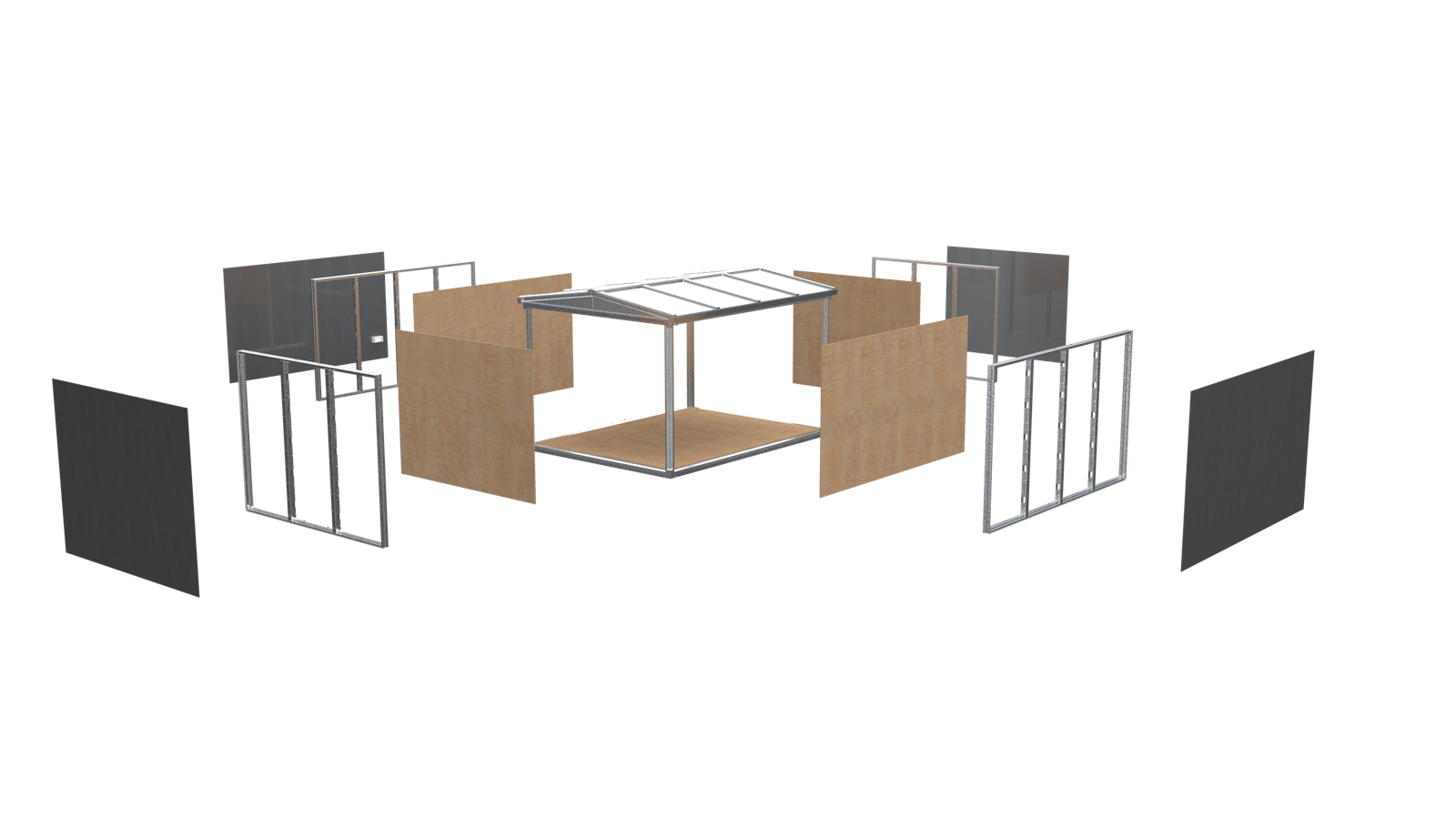
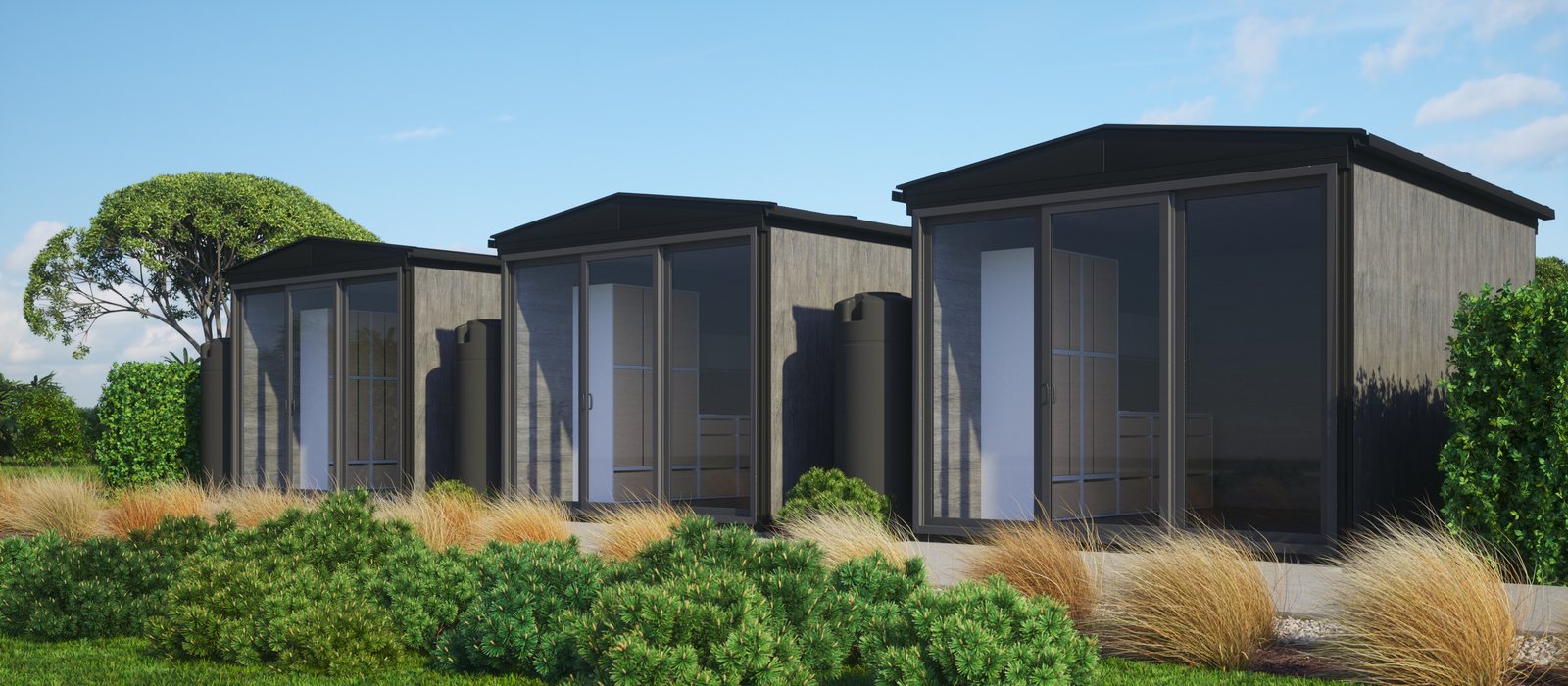
Every Anyplace application begins from the same 46-part modular system. Each module measures 4480 × 3430 × 2670mm and weighs 1983.47kg. Each assembles in one day with two people and fewer than ten tools. Each is built from primary aluminum sourced through the Hydro North America Technical and Economic Discovery Agreement. Each recovers 98% of its material value at end of life — measured across a completed ten-unit production pilot, not projected.
What changes between the five Anyplace applications is not the structure. It is the interior payload, the configuration, and the use. A residential module becomes a classroom by replacing the Payload interior. A classroom becomes a medical station by replacing it again. A medical station becomes a permanent home by replacing it once more. The structural frame stays. The function moves.
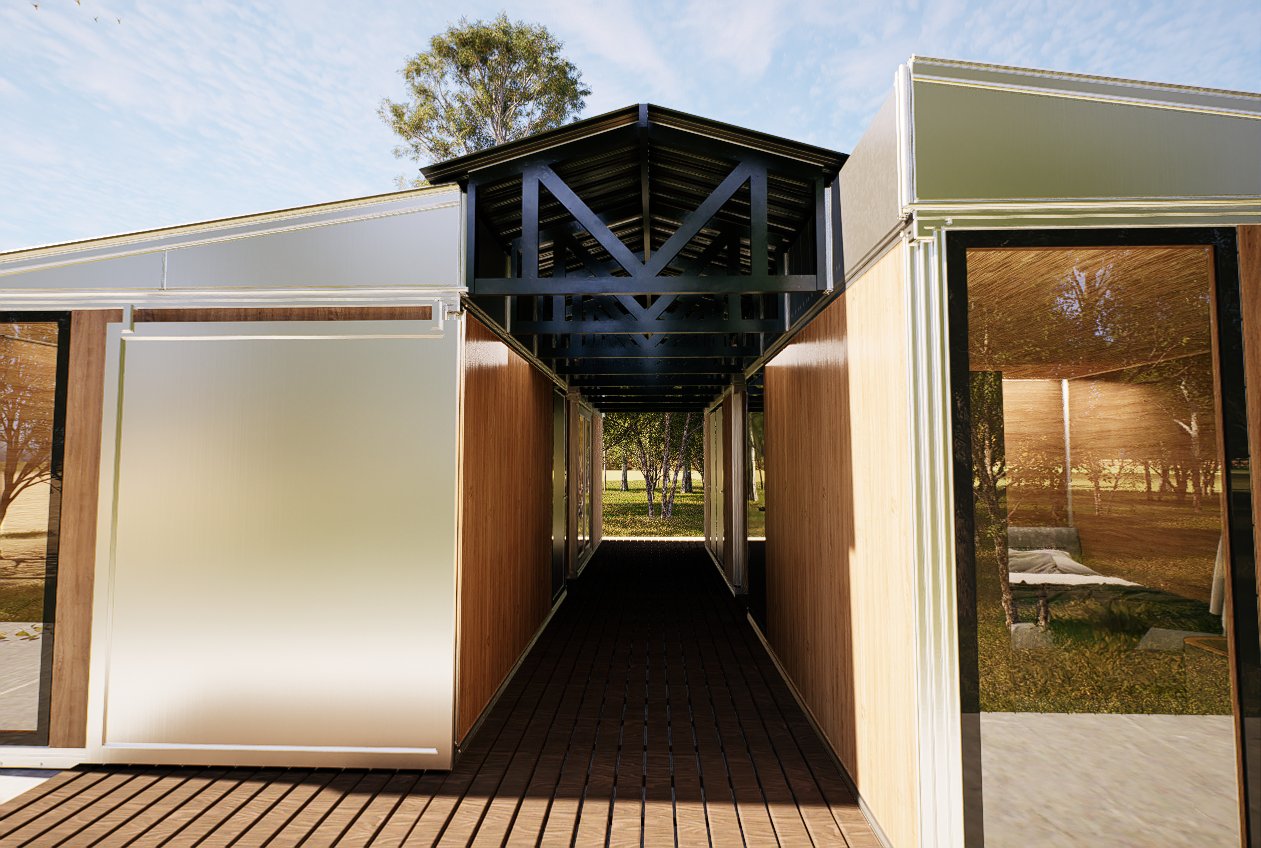
The five applications
Anyplace Living
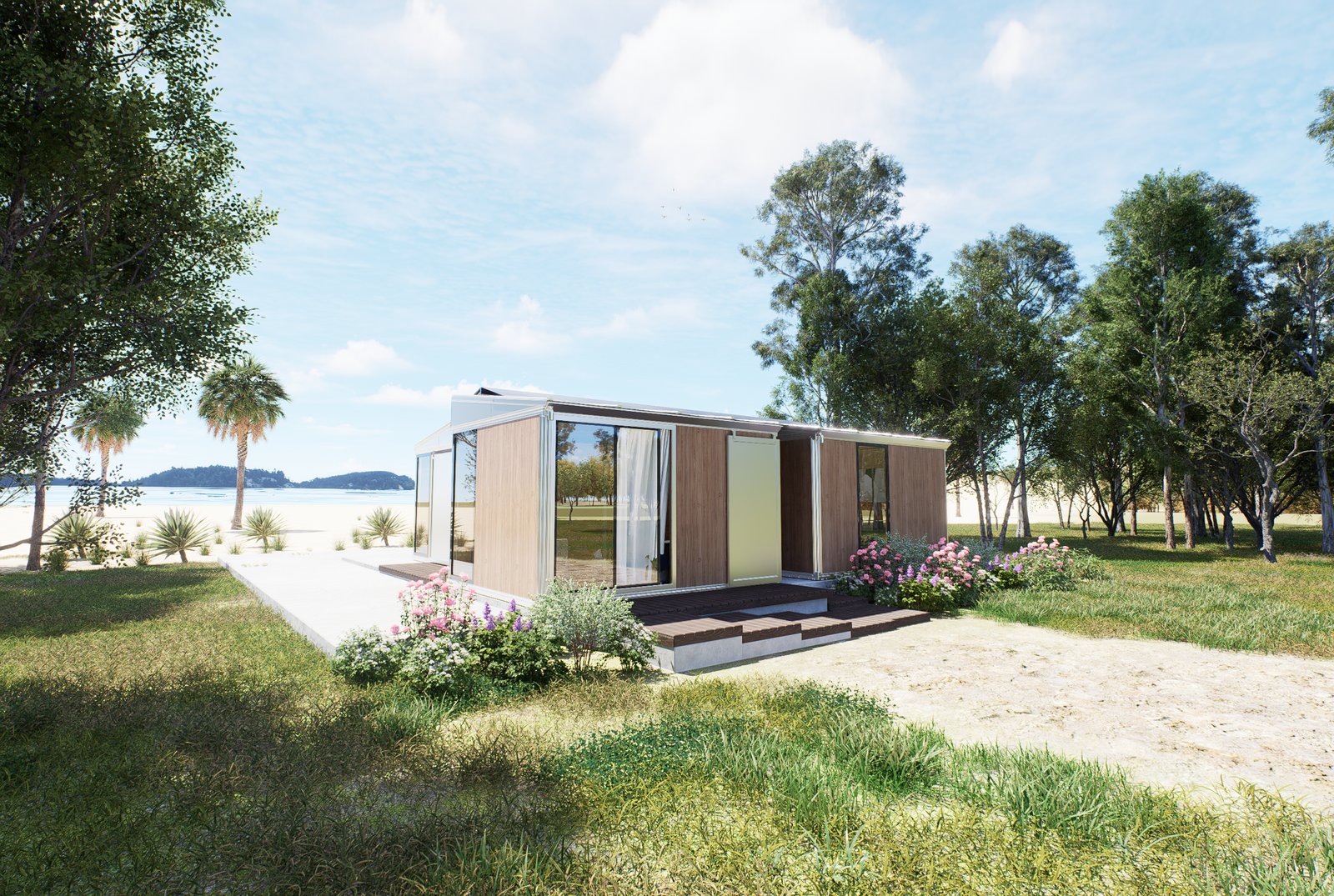
Housing at every income level.
Single-module dwellings starting at one bedroom, scaling module by module to two-bedroom, three-bedroom, and multi-family configurations. Financed module-by-module as personal property. Land mortgaged separately. The first manufactured housing asset with a documented, validated end-of-life floor value — making chattel financing structurally sound for the first time.
Anyplace Interiors
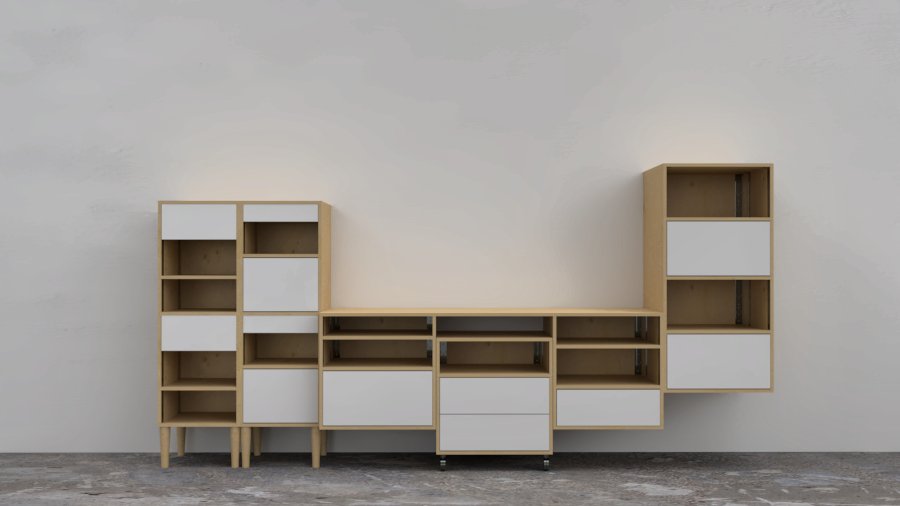
Payload — the cabinet system that breaks the kitchen mortgage trap.
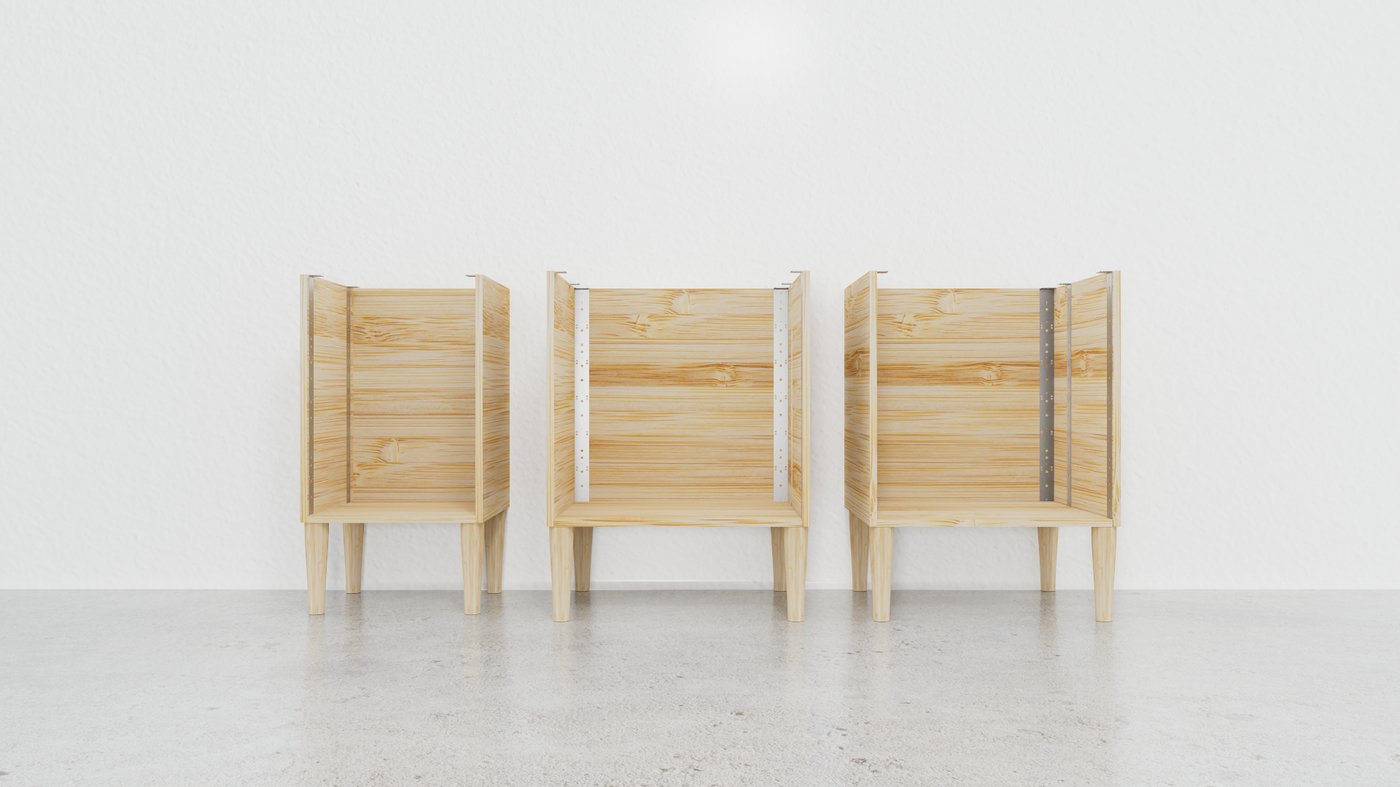
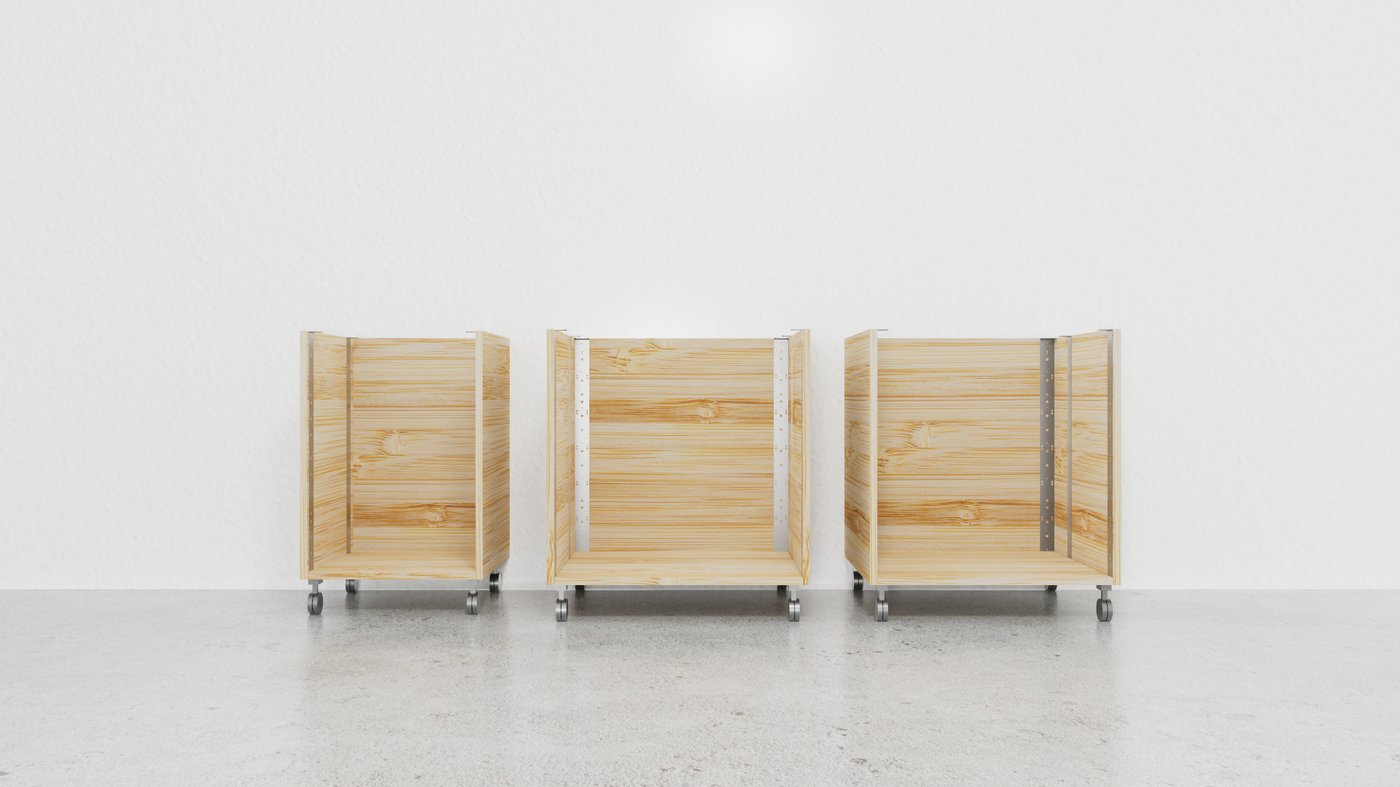
Developed with Rohanna Rastkar. Payload is the modular interior cabinet system that lets kitchens, bathrooms, and storage reconfigure as life changes — converting to nightstands, desks, mobile workstations via legs and wheels. Aging-in-place modification in one day, zero waste. End-of-use panels repurpose as construction fencing or concrete formwork.
Anyplace Industrial
Workforce housing, site offices, machine enclosures.
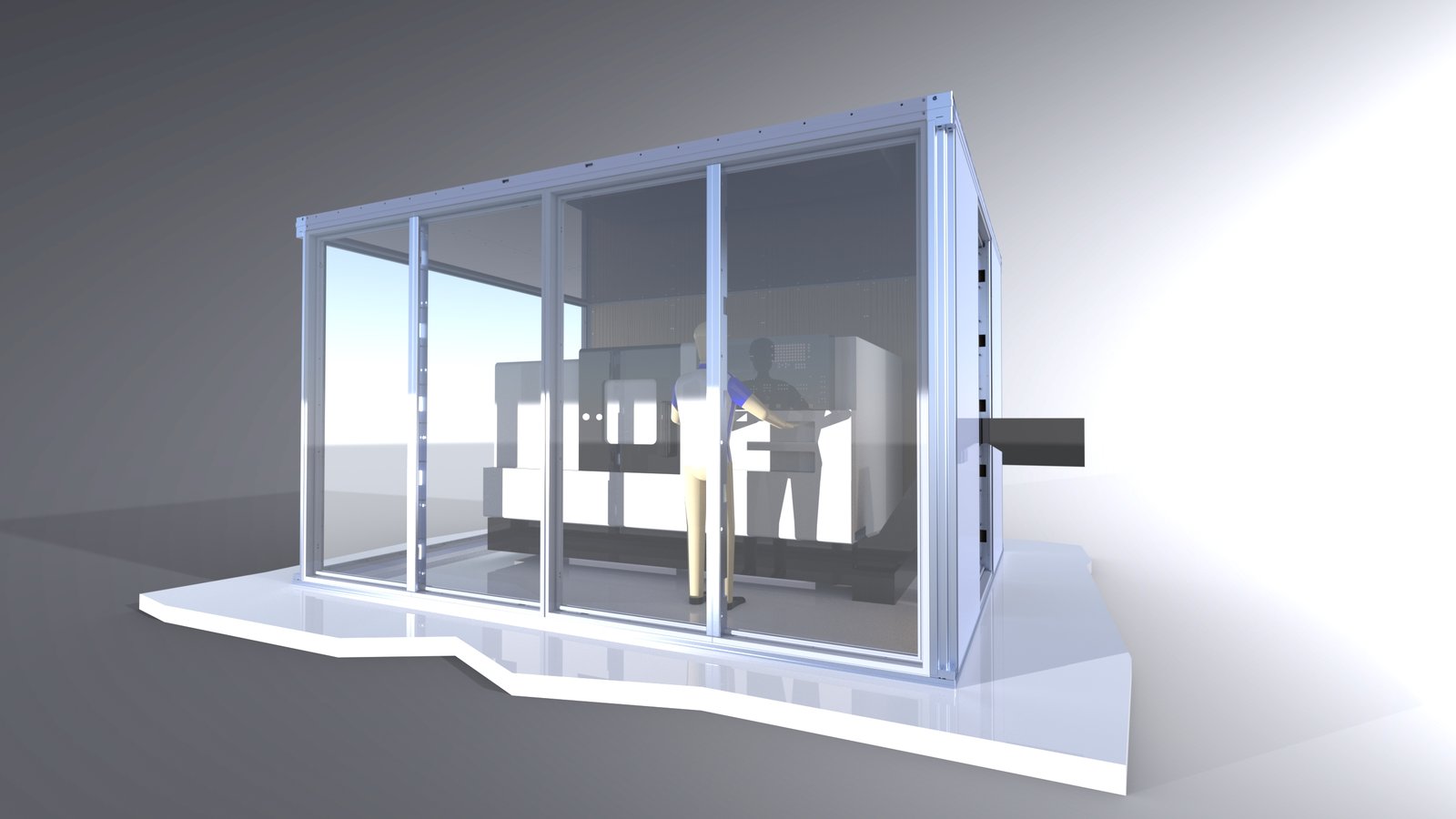
Industrial sites move. Workforces move. Machine tools that need sound enclosures, dust containment, or operator safety isolation need housing too. Anyplace modules serve all of these — assembled on arrival, disassembled and redeployed when the site finishes. Same frame as residential, configured for the operational use, leaving no permanent footprint and producing no demolition debris when the work concludes.
Anyplace Commercial
Retail, hospitality, office — built to flex.
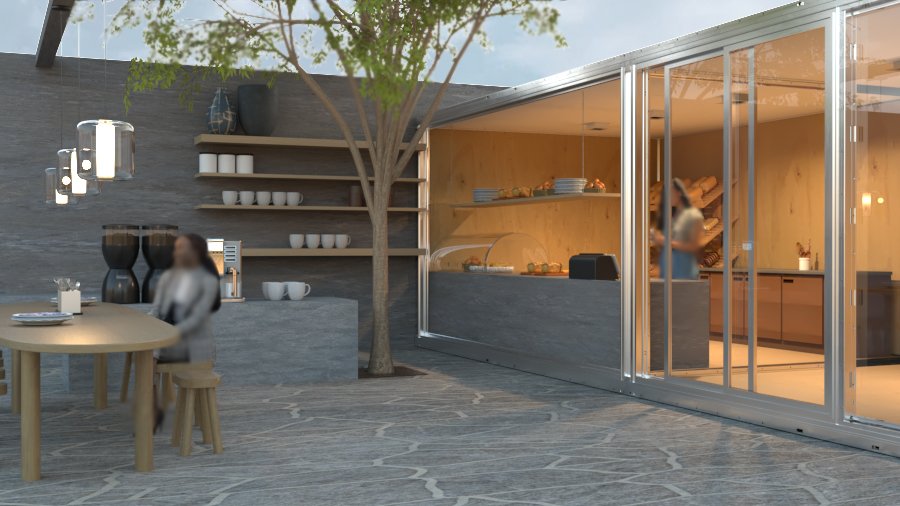
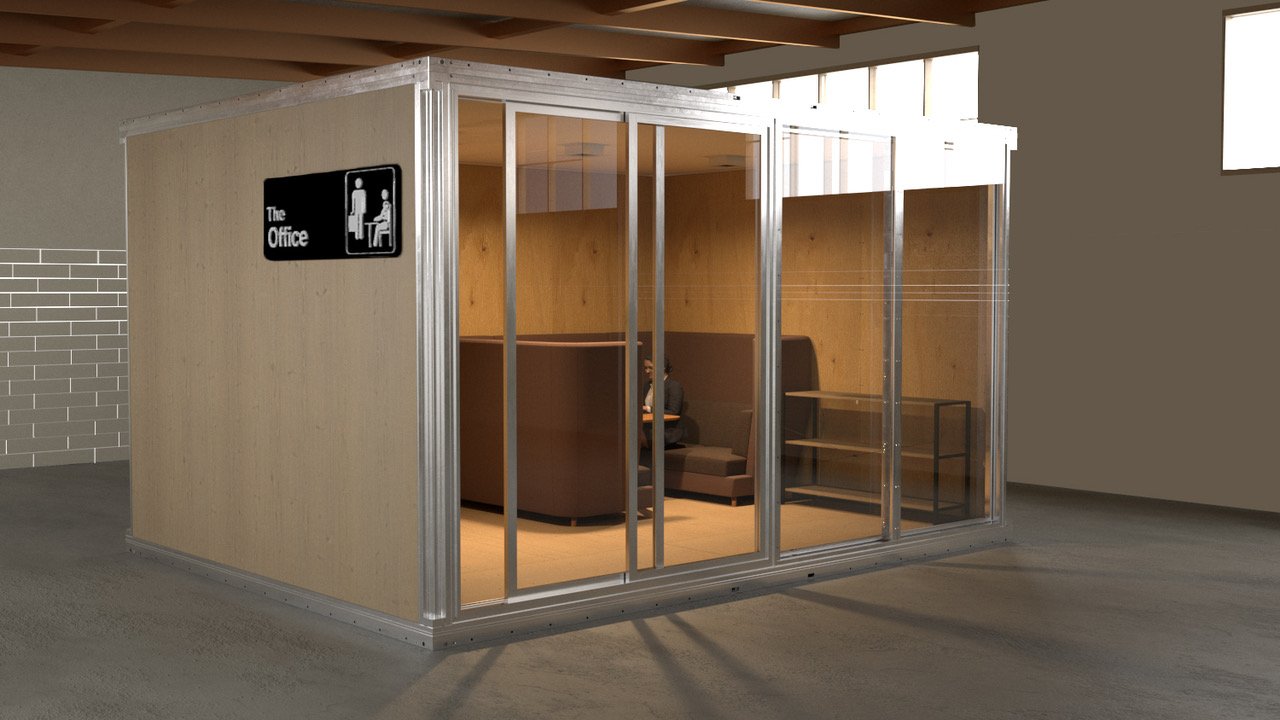
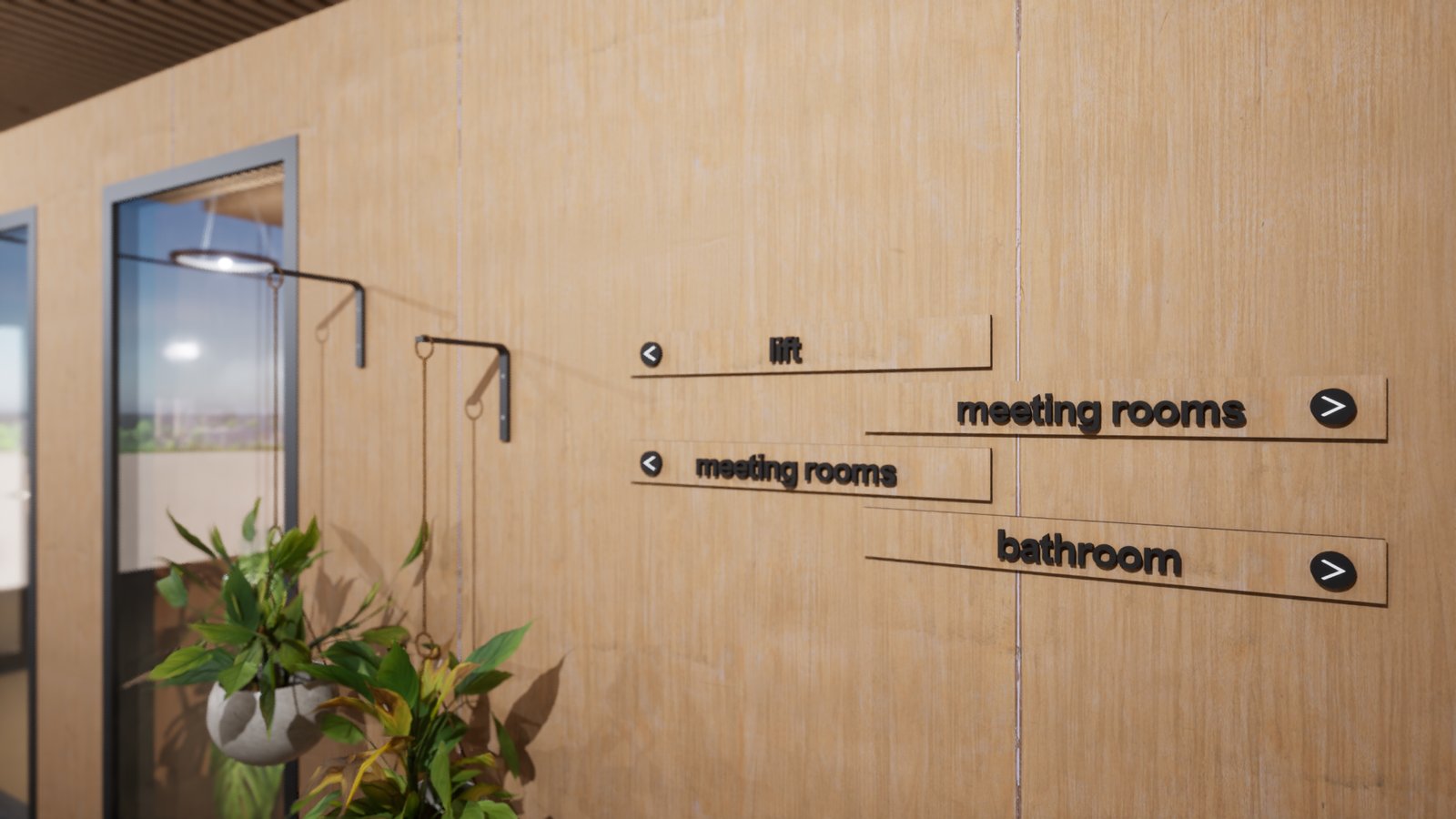
Conventional commercial fitout is one of the largest categories of construction waste in the world. A retail space rebuilt every five years sends its fitout to landfill every five years. Anyplace Commercial assembles into the configurations commercial use requires — cafés, retail counters, office meeting rooms, public visitor facilities — then disassembles back to inventory when the use ends. The fitout becomes a rotating asset, not a sunk cost.
Anyplace Relief
Disaster response that produces a permanent asset.
Pre-positioned containers deliver modules to disaster sites within hours. National Guard or local responders assemble without cranes or heavy equipment. Modules serve as emergency accommodation, sanitation, community gathering, medical triage, command, and education during the response phase — then reconfigure to permanent resident housing for displaced communities. Government investment ends as community asset, not landfill liability.
Schools and civic infrastructure too. When hurricanes destroy housing they also destroy schools, medical clinics, and civic buildings. The same Anyplace modules that provide emergency shelter become temporary classrooms while permanent schools are rebuilt — keeping children's education from being disrupted for months or years after the event.
Why this works as one system
Conventional construction treats the five applications above as five separate industries. Each has its own supply chain, its own contractor base, its own regulatory pathway, its own end-of-life problem. The Anyplace Ecosystem treats them as five faces of the same patented geometry. The supply chain is shared. The contractor base is shared (or eliminated — two people with standard tools). The regulatory pathway converges on the modular building codes that Florida's 2026 legislation and the ICC AMM pathway are opening. The end-of-life problem is solved once, for all five.
This is what "Anyplace" means. Not "anywhere geographically" — though that is also true. Anyplace functionally. Any function the patented frame can support, the frame supports. The function is in the payload. The structure is in the geometry. The geometry is in the patent.
The Anyplace Ecosystem is operationally protected by patents US9598852B2, NZ722998, and AU2015201461B2. The keying-rib joining system that makes the geometry possible is material-agnostic and geometry-agnostic — a broad and structurally strong patent position covering the functional principle, not a specific implementation. Validation record →