Testing Anyplace — Weathertight, Thermal, and Built to Perform
The validation discipline behind every Anyplace performance claim.
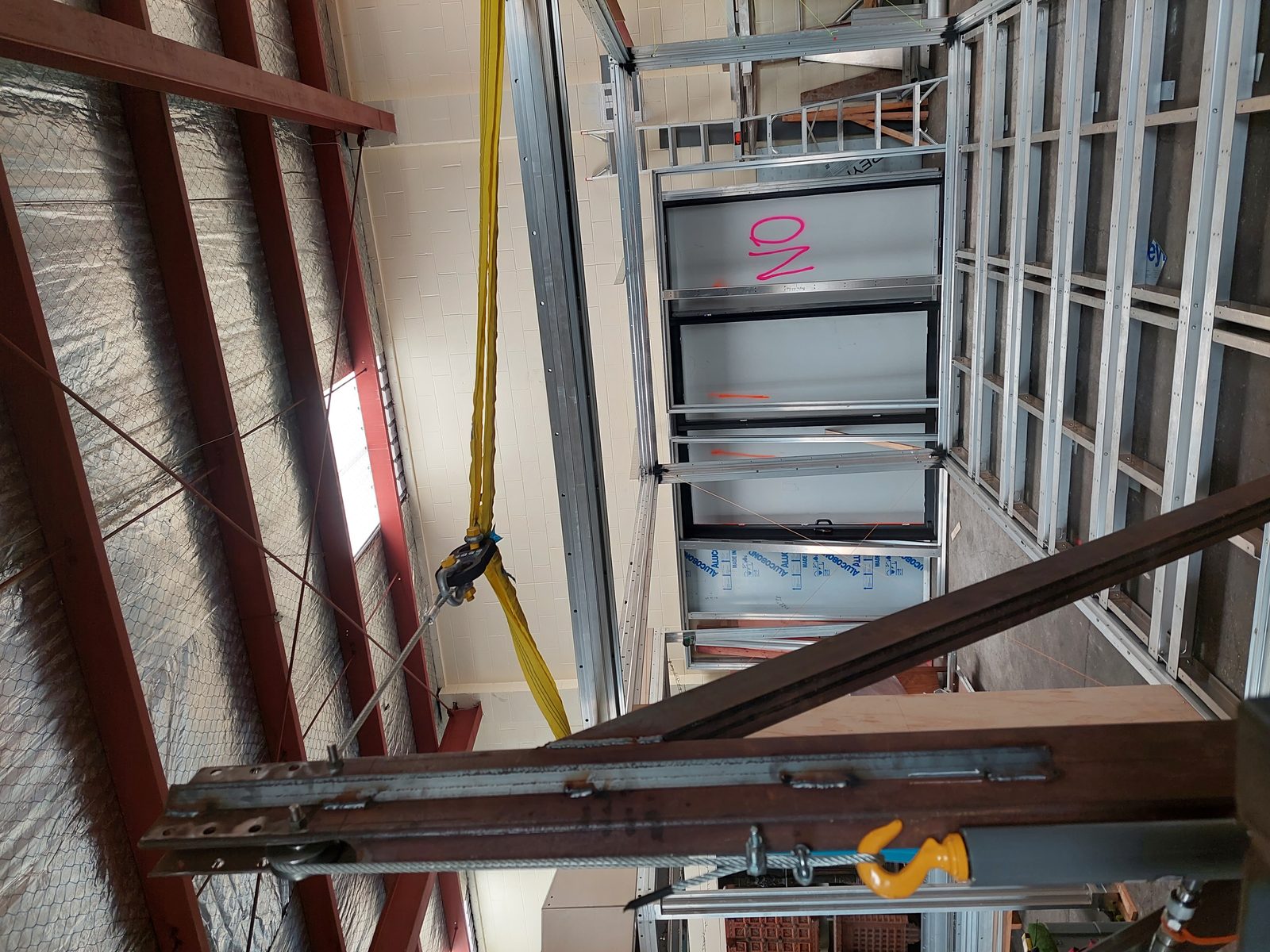
From day one, we've designed Anyplace modules with two priorities front and center: weathertightness and thermal performance. It's not just about picking the right materials—like our low-carbon aluminum—but how they work together to keep the elements out and comfort in. In May, we took a big step forward, installing a proof-of-production module outdoors to gather real-world data. Simulations are great, but nothing beats the truth of rain, wind, and heat hitting a live build.
Bare Minimum, Real Results We set up this module with the bare minimum seals—intentionally. Why? To cut down on synthetic materials and test our system at its leanest. Even stripped back, it performed as designed, proving the bones of Anyplace are solid. That said, most of our weathertight components are built with triple-redundancy seal capability—overkill we didn’t tap for this test. By starting with the basics, we’re collecting baseline data that shows what’s possible with less, not more. Real-world testing like this is how we refine, not just theorize. TetherHQ: Data in Real Time
To dig into the numbers, we teamed up with TetherHQ ( https://www.tetherhq.com/ ). They hooked us up with temperature and relative humidity sensors inside and outside the module, plus their EnviroQ IoT IAQ system for air quality insights. This isn’t old-school data logging—thanks to TetherHQ’s real-time IoT setup, we see results as they happen. Tweak a seal or adjust a panel? New data rolls in instantly, no waiting for downloads. It’s a game-changer for understanding how Anyplace performs under real conditions. A Different Logic: Insulating the Interior.
TetherHQ EviroQ
Here’s where Anyplace breaks the mold. Unlike traditional builds obsessed with insulating entire structures—piling on materials prone to rot or mold—we focus on insulating the interior, not the building itself. Our low-carbon aluminum doesn’t rot or fester, so we’re free to rethink the rules. This divergent logic slashes material use and lets us craft a custom insulation system that’s leaner and smarter. (Stay tuned—more on that in a future post!) For now, our May test is showing us how this approach holds up, and the early data is promising.
Relative humidity is the ratio of the current amount of water vapor in the air to the maximum amount of water vapor the air can hold at a given temperature.
Why It Matters This outdoor module isn’t just a test—it’s a window into Anyplace’s future. Weathertightness keeps life dry, thermal performance keeps it comfortable, and real-world data keeps us honest. With TetherHQ’s tech lighting the way, we’re not guessing—we’re measuring, adapting, and proving that a sustainable, modular system can deliver without excess. Anyplace isn’t built to sit still; it’s built to perform, wherever it lands.